
There's a restaurant in Calgary where you can eat an 18-course tasting menu that weaves Indigenous ingredients with immigrant flavours, where reservations sell out within an hour of opening, and where the experience is closer to cultural encounter than dinner service. There's another where a West African chef was recognized by the Women's Executive Network for contributions to the food industry. Another serving rare Tibetan cuisine. Another ranked 81st globally in the 2025 50 Top Pizza awards — the only Canadian pizzeria on the list.
This is not the Calgary that most people outside the city imagine. The stereotype — steak, steak, more steak, and a Stampede breakfast — was never the whole story, but it was close enough to accurate for long enough that the correction requires emphasis. What's happening in Calgary's restaurant scene now is not a refinement of the old identity. It's a replacement. And the replacement tells you more about what the city is becoming than any economic development report.
Eight and the new Calgary table
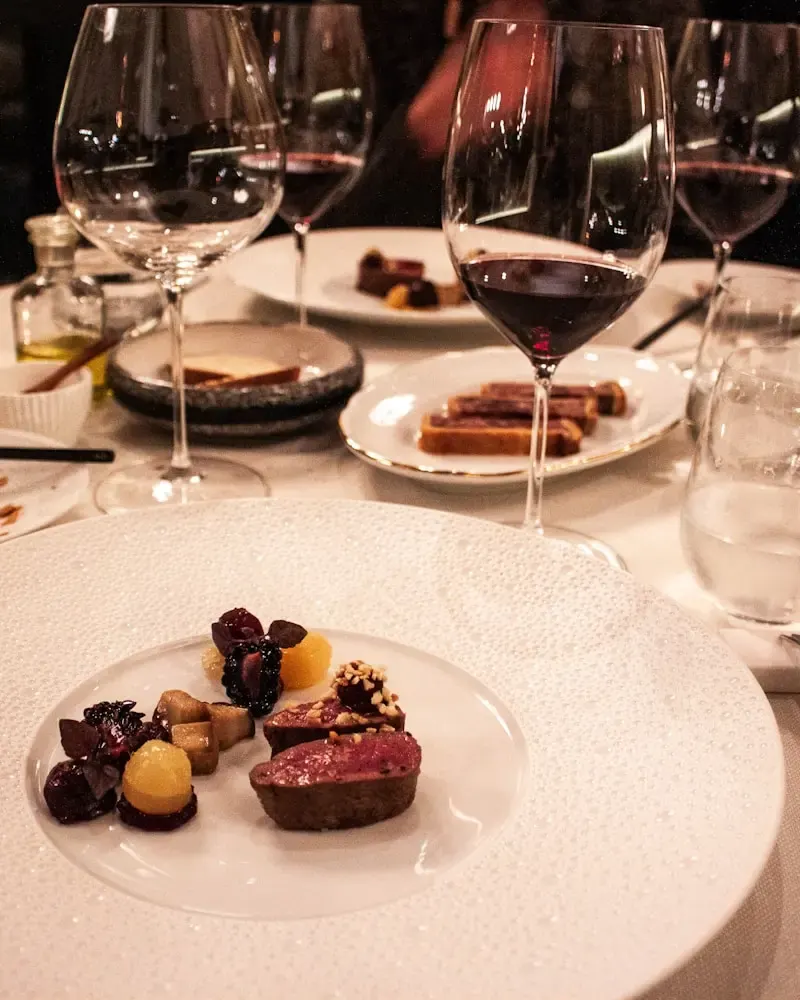
Eight operates on a model that shouldn't work in a city this size. An 18-course tasting menu in a market where the median dinner out involves a pub and a burger. Reservations that evaporate in minutes. A kitchen that treats every plate as a thesis statement about what Canadian food can be when it stops trying to be French or New York or Tokyo and starts being the specific, strange, beautiful thing that happens when Indigenous land meets a century of immigration on the western prairie.
The restaurant's existence is proof of concept for a particular theory of Calgary dining: that the audience is here, it's sophisticated, and it's hungry for experiences that match the ambition of the best restaurants in any Canadian city. The sellout reservations aren't a fluke. They're a market signal.
Flavours and the West African table
Adebola Esan's Flavours Restaurant represents something different: not the high-concept tasting menu but the cultural anchor — the restaurant that introduces a cuisine to a city that hasn't encountered it at this level before. West African food in Calgary was, until recently, confined to small operations with limited visibility. Flavours changed that equation. Esan's recognition in the 2025 Women's Executive Network Food Industry Awards isn't just personal validation. It's institutional acknowledgment that West African cuisine belongs in the conversation about Calgary dining, period.
The significance extends beyond the food. Every immigrant-owned restaurant that achieves critical and institutional recognition reshapes the city's culinary self-image. It tells the next chef from Lagos or Accra or Dakar that Calgary is a viable market. It tells the food media that the city's story includes cuisines beyond the Euro-Western canon. It tells diners that their next great meal might not come from the tradition they're most familiar with.
The global outliers
Roaming Yak YYC serves Tibetan cuisine — rare enough in any North American city, extraordinary in Calgary. The restaurant occupies a niche that most food scenes don't even know exists, introducing diners to a culinary tradition that is geographically, culturally, and historically distinct from the broader category of "Asian food" that Western markets tend to collapse into a single shelf.
Pizza Culture Napoletana landed at 81st in the 2025 50 Top Pizza global rankings — the only Canadian pizzeria recognized. In a food category dominated by Naples, New York, and Tokyo, a Calgary operation placed on the international leaderboard. This isn't local pride masquerading as significance. The 50 Top Pizza list is the most credible ranking in the pizza world, and Calgary is on it. Full stop.
Nupo runs a Cultural Chef Exchange series that brings international chefs to Calgary — a programming model that uses the restaurant as a cultural institution rather than just a dining room. Each exchange introduces the local food community to a different culinary perspective, building knowledge and relationships that outlast any single dinner service.
The YYC Food and Drink Experience
The 2026 edition of YYC Food and Drink Experience runs March 13–29 and represents the festival at its largest: 115-plus participating restaurants (the highest in festival history), 17 days of multi-course prix fixe menus, and 12 exclusive chef-led culinary events.
The festival functions as an annual census of the food scene. The participation list reveals which cuisines are represented, which neighbourhoods are active, and how the city's dining identity is evolving. One hundred and fifteen restaurants is not a curated selection of the "best" — it's a cross-section that includes fine dining and casual spots, downtown and suburban, established and new. The breadth is the point.
For diners, it's the most efficient way to expand your restaurant vocabulary. Prix fixe menus remove the risk of committing to an unfamiliar restaurant at full price. The chef-led events offer experiences that aren't available during regular service. If you eat out during the festival, you'll eat better than usual and spend less than you'd expect.
What's coming
The pipeline is as interesting as the established scene.
Alva, a Canadiana-themed restaurant with 50-foot ceilings and 6,000 square feet of space, opens at The Edison in June 2026. The scale alone is a statement — this isn't a 40-seat bistro but a venue-scale operation betting that Calgary can support a destination restaurant built on explicitly Canadian culinary identity.
Hello Nori, described as Canada's "premier hand roll bar," is opening its first Calgary location in Bridgeland. The concept — omakase-adjacent but focused on hand rolls — represents the continued sophistication of Calgary's Japanese food scene, which has quietly become one of the deepest in western Canada.
Chef Nicole Gomes is bringing a travel-inspired concept to the Calgary airport — a move that matters more than it might seem. Airport dining is how a city introduces itself to visitors, and a chef-driven concept at YYC signals that the first meal in Calgary can be as interesting as the last.
The Ethnik Festival
The Ethnik Festival of Arts and Culture, running February 27 through March 1 at the Genesis Centre, featured a "Calgary Food War" cooking competition alongside its arts and performance programming. The festival is Alberta's premier Black History Month celebration, and the inclusion of a culinary competition reflects the understanding that food is cultural expression — not a sideshow to the music and dance but an equal participant in the conversation about identity.
The festival also featured a Black-owned vendor market and workshops on Black history, embedding culinary culture within a broader framework of community celebration and education.
Food as cultural argument
AFAR Magazine ran a feature declaring that Calgary's restaurant scene has "long ago shed its reputation as a simple meat-and-potatoes kind of town," noting a "boundary-pushing focus on immigrant flavors, unique fusion creations, and the underrated seasonal bounty of the prairie provinces."
This is correct, and it's worth sitting with the implications. When a national travel publication tells its readers that Calgary is a food destination, it's not just boosting tourism. It's revising a narrative. The old story — Alberta beef, cowboy culture, steakhouse dominance — was true and reductive. The new story — Indigenous tasting menus, West African innovation, Tibetan cuisine, globally ranked pizza, chef exchanges with international kitchens — is also true, and it's the one that reflects the city as it actually exists in 2026.
Restaurants are the most democratic cultural institution a city has. You don't need a ticket or a membership or a dress code. You walk in, you sit down, you eat. The meal is the encounter. And the quality and diversity of what Calgary offers at its tables now — not in five years, not aspirationally, but right now — is one of the most compelling arguments that "Blue Sky City" isn't just a slogan.
It's lunch.
*The Chinook covers Calgary's arts, culture, and the politics that shape them.*