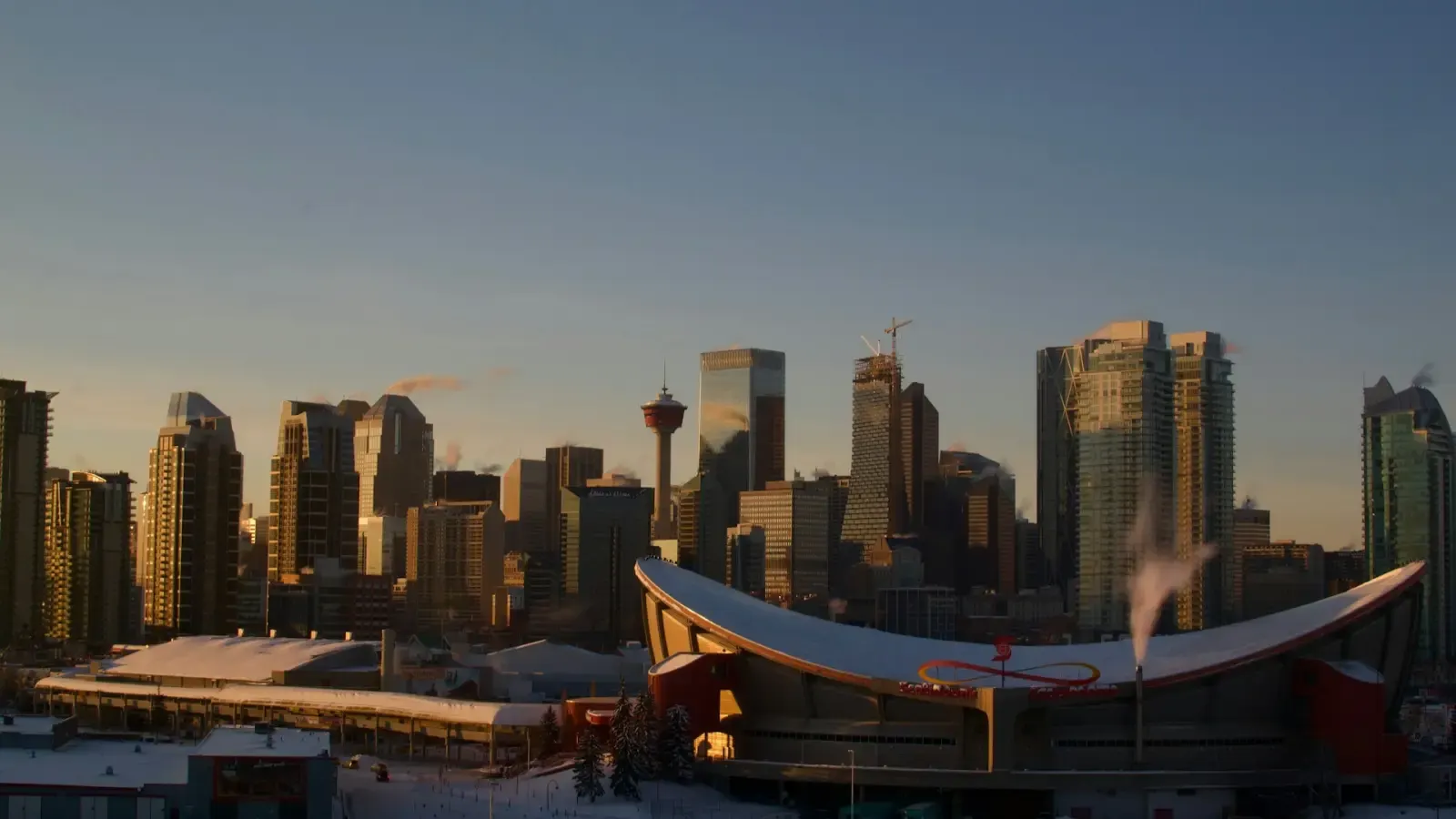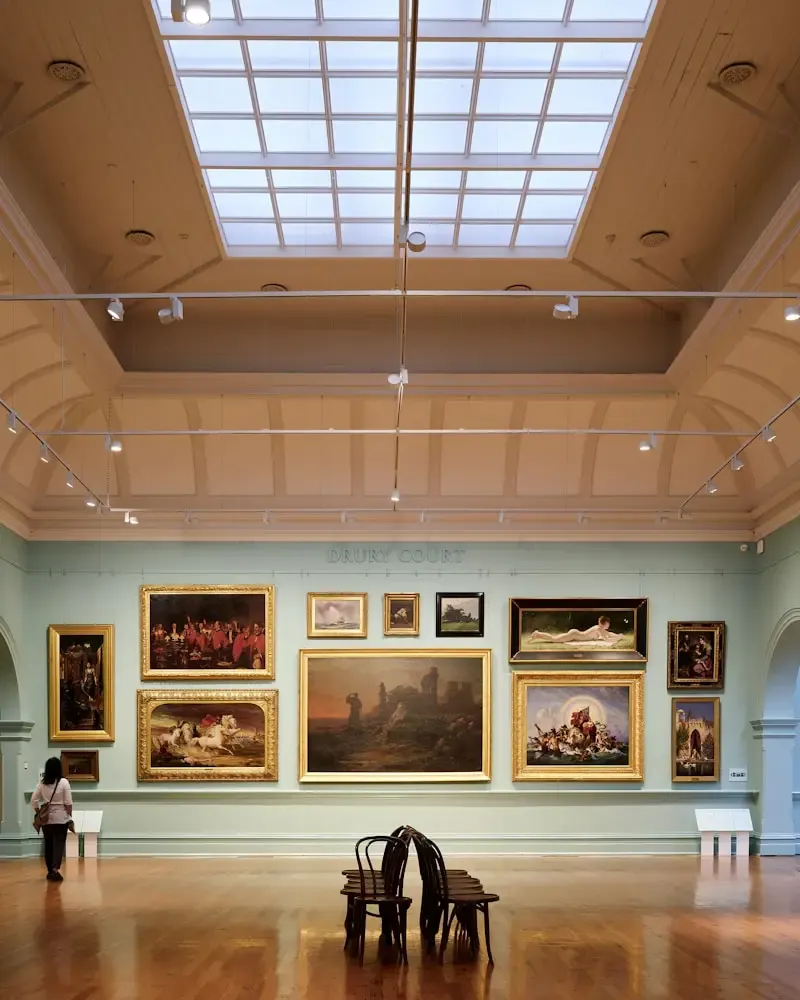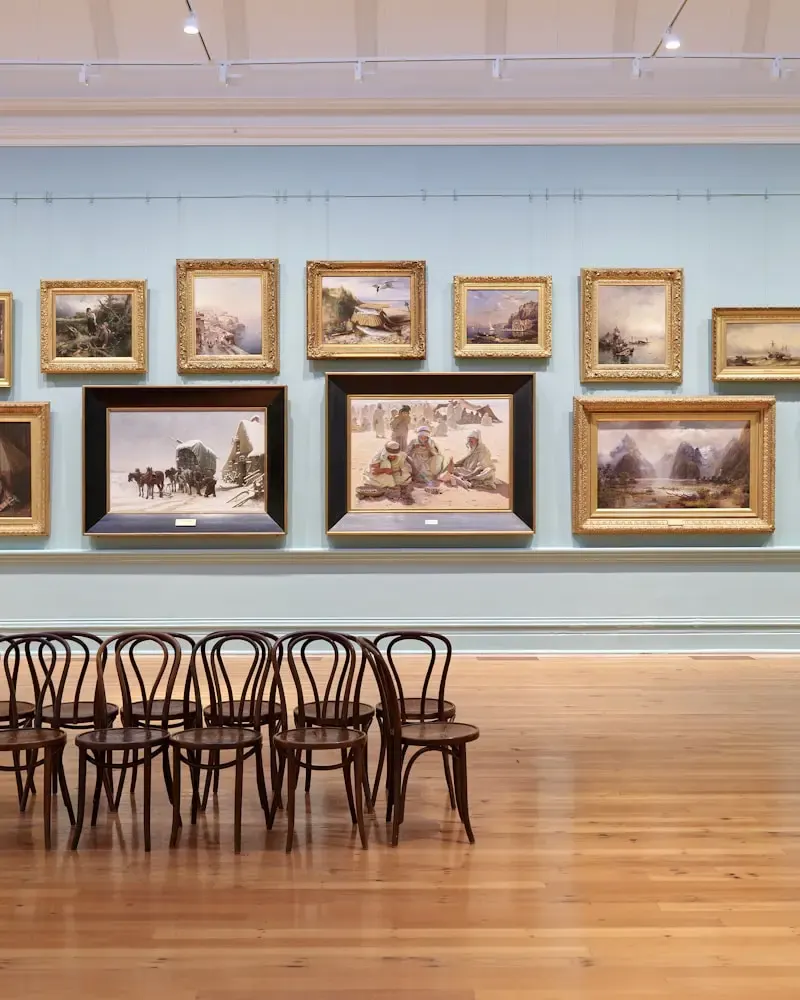

The Glenbow Museum closed its doors in August 2021 for what was described as a transformational renovation. It has not reopened. The current timeline suggests 2027, which would make it six years — or roughly the time it takes for an entire generation of schoolchildren to pass through elementary school without a field trip to the place that was supposed to teach them what Calgary is.
The renovation is real, it's ambitious, and by most accounts it will produce something genuinely remarkable. The $205-million project — branded "Glenbow Reimagined" and now formally the JR Shaw Centre for Arts & Culture — is delivering a skylit lobby, visible storage galleries housing 250,000-plus works, a rooftop terrace designed by Maya Lin Studio, a new Blackfoot Gallery curated with Elders from Siksika, Piikani, Kainai, and Blackfeet Nation under the direction of Indigenous curator Gerald McMaster, and galleries co-designed with Calgary's immigrant communities. A $35-million gift from the Shaw Family Foundation established a $25-million endowment that will make Glenbow the first major Canadian museum with permanently free general admission.
On paper, this is transformational. On the ground, the city has been without its flagship museum for half a decade, and counting.
The cost of absence
Museums are strange institutions. They're easy to take for granted when they're open — another line item in the tourism brochure, another option for a rainy Saturday, another place school groups go because the curriculum says they should. But when they're gone, the absence compounds in ways that aren't immediately visible.
A museum is a commons. It's one of the few places in a city where anyone can walk in, regardless of income or education or background, and encounter something they didn't expect. Libraries serve this function for books. Parks serve it for space. Museums serve it for objects and ideas and the specific kind of encounter that happens when you stand in front of something real — a Blackfoot beaded shirt, an Emily Carr landscape, a geological specimen from the Burgess Shale — and the distance between you and the world collapses.
Calgary has been without that commons for nearly six years. No temporary measure, no satellite gallery, no touring exhibition fills the gap. The Glenbow at The Edison satellite gallery has itself closed as the team focuses on the new spaces. Contemporary Calgary is doing excellent work, but it's a contemporary art institution with a specific mandate — it's not the encyclopedic, cross-disciplinary, community-anchoring thing that Glenbow was. The Esker Foundation is beautiful and free but small by design. The military museums, Heritage Park, the Hangar Flight Museum — all worthy, all specialized, none a substitute.
What fills the vacuum is nothing. And nothing, over six years, becomes normal.
The children who don't go
There's a generation of Calgary kids — born in 2015, 2016, 2017 — who will enter junior high without ever having visited the Glenbow on a school trip. Their teachers may have taken them to the Central Library, to the Studio Bell, to Fort Calgary. But the museum experience — the encounter with physical objects arranged to tell a story about where you are and how you got here — isn't something those institutions replicate.
This sounds sentimental, and maybe it is. But cultural institutions function as civic memory. They're where a city stores the artifacts of its self-understanding and makes them available for inspection. When that storage goes offline for six years, the continuity breaks. The kids who never went don't know what they missed, and by the time the museum reopens, they'll be teenagers with other priorities. The window closes.
The timeline that keeps moving
The Glenbow's reopening timeline has been a moving target. Early projections suggested 2025. More recent messaging pointed to 2026. The Glenbow's own visiting page and Tourism Calgary now indicate 2027. Each adjustment is explained by the scale of the renovation, the complexity of the construction, supply chain challenges, the deliberate pace required to get the Blackfoot Gallery right — all of which are legitimate reasons and none of which change the fact that the museum has been closed for longer than many of the organizations that depend on its gravitational pull have existed.
Major museum renovations take time. The Rijksmuseum in Amsterdam closed for ten years. The Museum of Modern Art in New York has undergone multiple multi-year closures. These projects deliver extraordinary results. But the institutions that undertake them are embedded in cities with dense cultural ecosystems that absorb the absence. Amsterdam has dozens of world-class museums. New York has hundreds.
Calgary has one Glenbow, and it's been a construction site since the pandemic.
What reopening will mean
When the doors finally open, the building that greets Calgarians will be worth the disruption. The free admission model, funded by the Shaw endowment, is genuinely groundbreaking in the Canadian context. Major museums across the country have debated free admission for decades, constrained by revenue models that depend on gate receipts. Glenbow solved the problem not through public policy but through private philanthropy — a $25-million endowment large enough to generate the revenue that ticket sales would have provided.
The implications are significant. Free admission removes the most basic barrier to participation. It changes who walks through the door — not just tourists and enthusiasts, but families who wouldn't have paid $18 per adult, teenagers killing time after school, new Canadians exploring the city, seniors on fixed incomes. It turns the museum from a destination into a neighbourhood resource, which is what museums were supposed to be before they became attractions.
The Maya Lin rooftop terrace adds a public space to the city's downtown at a time when downtown desperately needs reasons for people to be there. The Blackfoot Gallery, curated by Indigenous Elders and an Indigenous curator, represents the kind of institutional commitment to reconciliation that goes beyond programming into governance — the people whose territory the museum sits on will have a permanent, structurally embedded voice in how their stories are told.
The galleries co-curated with immigrant communities acknowledge what the old Glenbow never fully did: that Calgary's story is no longer primarily a story about ranching and oil, and the institution that tells it needs to reflect the people who are actually here.
The gap between ambition and reality
All of this is promising. But the Glenbow reopens into a city that has changed substantially since it closed. The downtown office vacancy rate hovers around 30%. The cultural anchors that once surrounded the museum — the restaurants, the shops, the foot traffic — have thinned. The audience that will walk through the free-admission doors has spent six years developing habits that don't include the museum, because the museum wasn't there to be included.
Reopening isn't a ribbon-cutting. It's a reintroduction. The Glenbow will need to re-earn its place in the city's cultural life, and that process will take years — ironically, perhaps as long as the closure itself. The free admission model helps enormously. The programming plans are strong. But the assumption that a closed museum simply picks up where it left off underestimates how much the city has moved on.
The planned opening exhibition is "Obsession: The Unscripted Life of Jeanne Beker." It's an interesting choice — accessible, celebrity-adjacent, likely to draw a crowd. But the real test isn't opening week. It's month six, month twelve, month twenty-four. It's whether the Glenbow becomes, again, the place where Calgary goes to understand itself — or whether six years of absence turned it into a place Calgary has to be reminded exists.
Until then
The construction continues. The collection waits. The endowment grows. And Calgary enters another year without the institution that, more than any other, was supposed to hold its civic memory in trust.
When someone asks what Calgary's major museum is, the honest answer for the past five years has been: closed. For the next year, it still will be. The city has gotten used to that answer. The harder question is whether it's gotten too used to it.
*The Chinook covers Calgary's arts, culture, and the politics that shape them.*